On March 24th 2012 I had an amazing and spectacular day. I had my very own display in the Lego Brick Bash held annually in Ann Arbor, Michigan. Brick Bash is a Lego fan convention that anyone can attend but only adults and teens can build the displays. It’s really fun to tour through all the exhibits and look at all the stuff that people have created. All kinds of things are built for Brick Bash including plants, animals, buildings, machines, and robots. Brick Bash has inspired many of my Lego creations over the years, enough to make me want to go to LegoLand Florida!
How I got to Brick Bash is a neat story. Around two or three years ago I was going to a group called Brain Monkeys for a program called Sumo PIE. The Brick Bash has been sponsored by them for years. When Brain Monkeys announced they would like a group of people to build Great Ball Modules for the Brick Bash, I was happy to join them. I had no idea how to build one. Unfortunately, they couldn’t help me build one, but they were interested in what I would build. In a sour mood, I surfed the web and stumbled across what I was looking for. I, deciding it looked like something I would like to build, tried to build something like it. After a dozen times of trying, I eventually got a working model and decorated it. Then, I decided I would build some other things too. It was hard and fun work building my display and because of that, it attracted lots of visitors. In fact, it attracted so many visitors that my throat soon got sore and I had to leave dad to do all the talking for me!
Great Ball modules are sections of a contraption that is called a Great Ball Contraption. The goal of the modules is to transport Lego soccer balls from one side of the module to the other side using moving Lego pieces. This is achieved in many ways. The pushers push balls out like a bulldozer. The ferris wheels trap balls and fling them in vertical circles so that they gain momentum and launch down a shoot. Finally, the lifters pull balls up slopes like an elevator or a forklift.
I had a pusher and a lifter. The pusher had had moving stairs and the lifter had spinning arms. My dad calls it the Great Exercise Machine because the balls had nowhere to go at the end, but to bounce onto the table in random directions. Often kids and even other adults would help catch the balls and return them to the machine. Here is a video of the machine:
Of course, I had brought other stuff too. I had brought a dinosaur diorama, based off the Dinosaur Habitat Protection Facility ( See earlier blog post ). It has gotten bigger since then and has gained a helicopter. The kids at Brick Bash loved it. Here are some photos:

A view of the whole scene.

A view of the helicopter. (Warning T-Rex may get loose!)

A photographer taking a picture of the dinosaur.

The explorer romps through the jungle!

A dinosaur laying low. (They still haven't chained up the T-Rex!)

A sheep on a rocky outcropping.
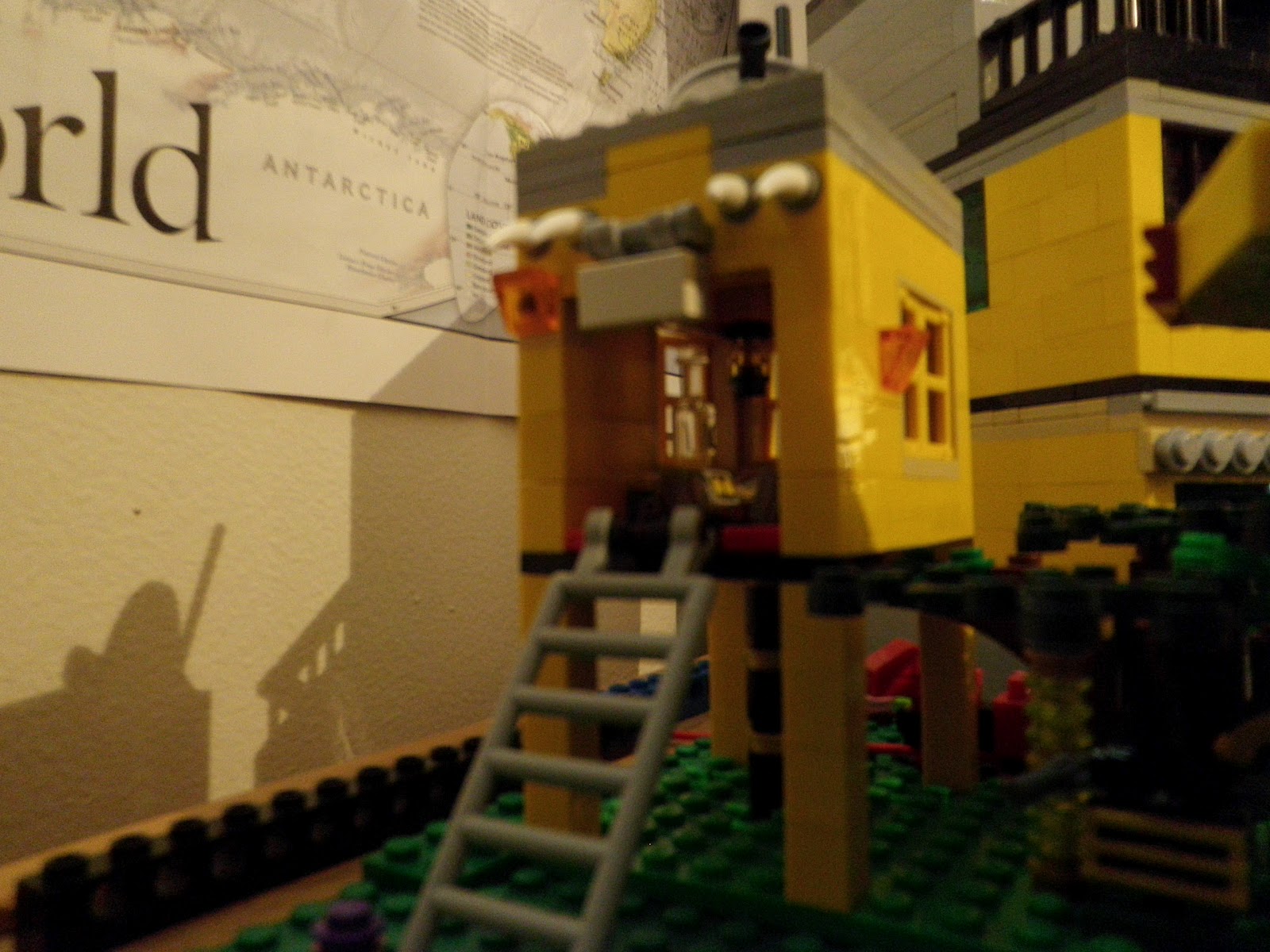
Surveillance shed.

Interior view of the surveillance shed. It includes a beer bottle, surveillance equipment, and maps.
And finally, I brought something called Lego MBA, which stands for Lego Master Builder Academy. Lego has started up a theme to help Lego builders to get better at building with Lego bricks. Once you buy the first kit, you can buy a subscription and get a new kit every two months. They come with instructions that explain how to build the kits and what the designers where thinking when they built them. I had made a spaceport model using the first and second kits and I brought it to Brick Bash. I had it between the specially made instructions and the box it came in for people to come by and look at so they could discover MBA too. Dad used it to corral the balls. Here are photos of the model:
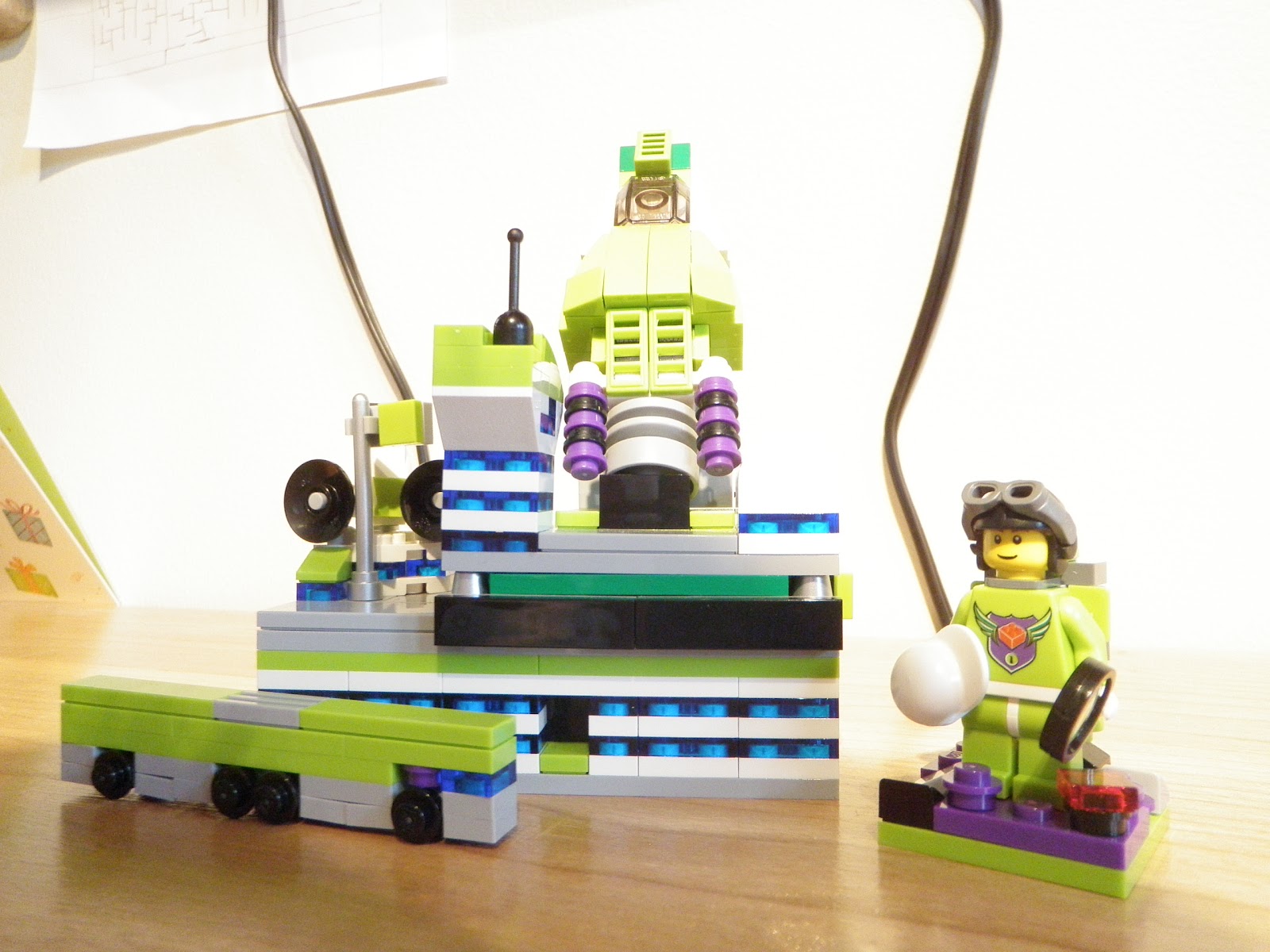
The entire thing.

Side shot.

The spaceman and his spaceport.

Space bus.

The spaceman.

Rocket ship back view.

Rocket ship front view.

Space center.
In the end I was the youngest person in Brick Bash, I had a Great Ball module, and I was proud of myself for doing such good work for and at Brick Bash!


